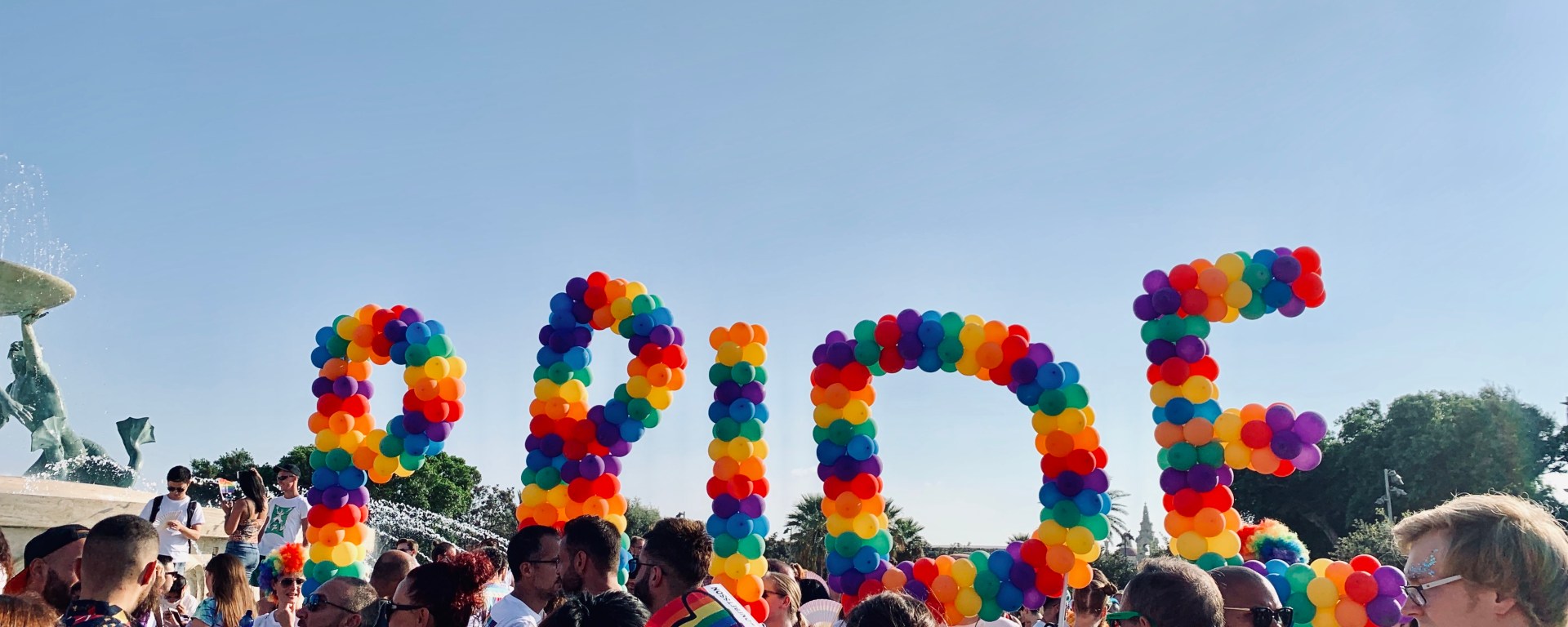
Thrown out of toilet rooms, shouted at in restaurants and having friends turn against you – this is still part of the experience of being LGBTIQ+ in Malta in 2019.
According to a report by the International Lesbian, Gay, Bisexual, Trans and Intersex Association, Malta is not only at the top of Europe when it comes to gay rights, but it also first worldwide. But, is this really true?
Children and teens shared their stories of being in Lesbian, Gay, Bisexual, Trans, Intersex and Queer (LGBTIQ+) families at the ‘It’s ok 2b different’ event, organised for Pride Week.
Matthew, 19, who took part in the workshop, said their parents and some friends still had difficulty understanding their sexuality.
“When I was 14, I came out as a lesbian. By the time I was 16, I realised that the word transgender was more true to me. I cut my hair, bought boy clothes and underwear and it made me feel more like me. But I still had a feminine side.
“In January 2019 I came out as non-binary. I felt like this term represented me more than transgender. It was a shock to most people at first and I had to do a lot of explaining. My parents are still working on understanding.”
The Malta Foundation for the Wellbeing of Society, who organised the workship, said cultural and traditional factors are still very present in Malta, meaning some don’t want to open up to the idea that people have different sexualities.
Talking about how their friends reacted, Matthew said, “my friends and I grew up in very religious households, so when I came out as lesbian some people stopped talking to me. For the whole secondary years of school, I didn’t have friends.
“When I came out as transgender, they slowly started coming back, probably because they were older, they understood better and they were less dependent on their parents’ ideals. Most of my close friends are LGBTIQ+.”
For the whole secondary years of school, I didn’t have friends.
– Matthew
The workshop heard concerns from the voluntary organisation Allied Rainbow Communities that at school children are given limited information about LGBTIQ+ matters. This means students are beling left with unanswered questions, they said.
Giulia said that ‘coming out’ to her friends wasn’t always easy. “I only come out to trustworthy people. Once I told the wrong person and they started spreading rumours about me. People started asking me to choose a side, because apparently I couldn’t be both.”
Some of the children and teens were at the event in support of their LGBTIQ+ friends and family.
Maya, 13, said she was attending because one of her family members is transgender and gay.
She said: “I want to learn what they went through and what they experienced, because I saw how hard it was on them. It took them 18 years to figure out who they were and how to deal with it.”
During the event, Giulia raised the ‘We accept gays’ stickers, which were launched in June by former Equality Minister Helena Dalli to promote LGBTIQ friendly establishments. Giulia said she thought they were “offensive”, because Malta shouldn’t need a sticker to point out the places that are inclusive.
However, Matthew said he supported the idea. “Once I went to a restaurant with my ex-partner, who is gender fluid, and the waiter decided not to serve us. When we asked why we weren’t being served, the manager started shouting at us and we had to leave.”
“Another time I was in a fast food chain and I went to the bathroom. I entered the male one, but there were only urinals, so I had to go into the woman’s toilet.
“A waiter came in and told me I had to leave the bathroom immediately as I wasn’t allowed there.”
This article first appeared in the Times of Malta
Thinking of coming out?
Be comfortable with your decision: It’s 2019 and yet people still need to ‘come out’ to the rest of the world as being different from the normalised ‘straight’. Nevertheless, be sure you are comfortable with coming out, the when and how are your decision to make.
It’s ok to have questions: It totally normal to have questions and want to know more about the ins and outs of being part of the LGBTIQ+ community. There are many organisations you can approach for help, including the Malta Gay Rights Movement.
Give others time to process: There is nothing wrong with being part of the LGBTIQ+ community, but you should keep in mind that everybody can react differently. This does not mean that they do not accept you for who you are, but that they might need a little time to process. After all, you have had the time to process it and accept it yourself, so it’s only fair to give others the same courtesy.
What to do if someone comes out to you
Be discreet: Just because someone came out to you does not mean they are openly out to everyone else. It is not your information to share, even if you are just trying to help, you might push the person in a direction they are not yet comfortable or ready for.
Be supportive: Coming out is not easy and the person who has done it will be doing it for the rest of their life. Make sure you support them in the process. This can be in any form, if it’s by telling off someone who said something offensive or by walking pride as an ally. It’s always nice to know someone has your back.
Show them you are an ally: Although you should never assume someone is gay or otherwise, sometimes it’s easier to tell. If you think you know someone who is struggling to come out, make sure to nonchalantly drop your stance on something LGBTIQ+ related, like same sex marriage or the possibility for gay people to adopt children. This way, the person will know that they can confide with you when the time is right for them without thinking that you are in any way judging them.
 Travelling Blonde