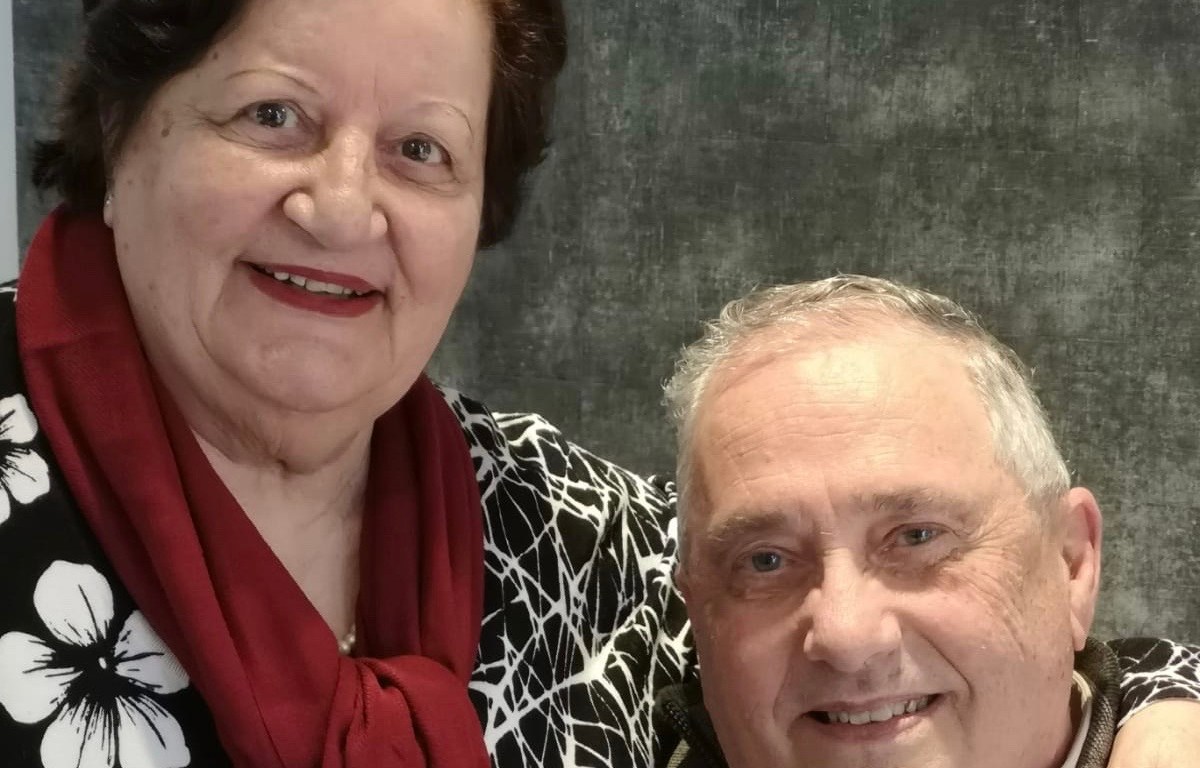
Professor Charles Farrugia, Founding-Dean of the Faculty of Education, former Pro-Rector and University Ombudsman, left Malta in October 1969 with his wife, Doris, and two daughters to pursue further studies in Montreal, Canada.
In Canada, he attained a bachelor’s and master’s degree in Communications and Education. The experience proved invaluable for his work as Pro-Rector as he launched Malta University’s first quality assurance project. Furthermore, his familiarity and knowledge of the study-unit modular system helped him device the Faculty of Education courses on the same system, which eventually was adopted by the other Faculties and Institutes at the University of Malta.
Towards the end of 1968, I applied for and was awarded a Canadian Commonwealth scholarship to study Communications Arts at Loyola College in Montreal. I opted for Canada because it was the only Commonwealth country that had the courses I wanted to focus on, Communication and Education together with Educational Technology.
Our parents considered us mad to go to the end of the world with two very young children. They must have prayed very hard for, when we were all packed to go in mid-September, I received a telegram from the Canadian Scholarship Committee informing me that the award had been withdrawn: no reason given.
My prosthetic leg could have cost us our entire adventure. I managed to speak to the Canadian High Commissioner, who had obviously been well briefed about the situation. He asked me to tell him my story and agreed that the decision to withdraw the scholarship must have been related to the fact that I wore a prosthetist. “How stupid,” he exclaimed at one point, “you will be using your brains not running for the Olympics.” He promised he would sort things out and would let me know in two or three days’ time. “Don’t unpack,” he said encouragingly: and sure enough, the scholarship award was reinstated soon after.
“It was all a misunderstanding.” Six months later, we found out a French speaking clerk had mistranslated ‘artificial leg’ in my medical report and the Canadian Scholarships Agency had thought I wanted to bring the remains of my amputated leg with me, even if it had been cremated in London eleven years earlier.
Our arrival in Montreal started quite disastrous. All of our bags were mislaid and the people that were supposed to meet us at the airport had given up waiting because our messages that we were delayed had not reached them. Worst of all, we could not hire a taxi because none were operating claiming the roads were unsafe. For the first time in history, the Montreal police and firemen went on strike and looters were rampant in the streets.
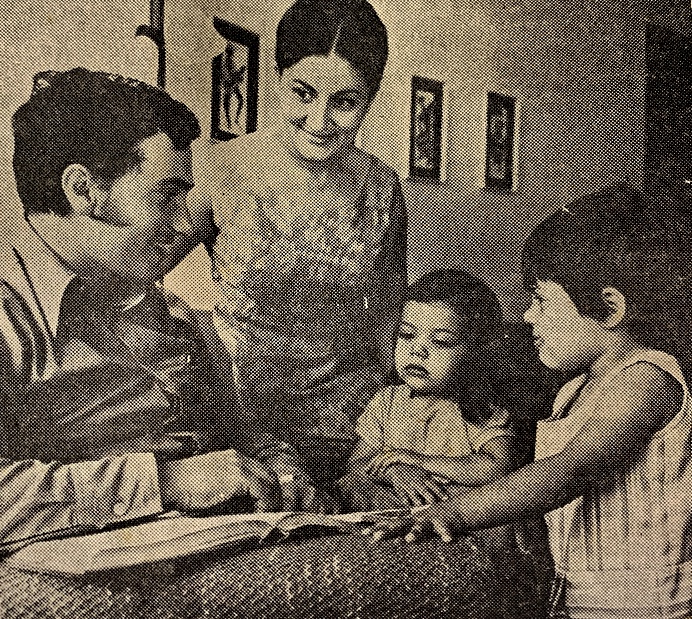
I struggled to fit into student-life at Loyola. The vast majority of students were much younger than I, and I felt like a fish out of water. When I mastered the intricacies of a curriculum based on the American study-unit modular system. It transpired that to graduate I had to complete modules in French, Latin, English Literature and Music. Worse still, I was sitting for lectures in communications and audio-visual techniques at a much lower level than the ones I thought in Malta. I felt frustrated and were it not for my wife’s perseverance, I would have returned to Malta once the whole experience was proving futile, not worth the effort and sacrifice.
Learning is worth much more when you have a great teacher. One thing I was grateful for was the module I registered for with Dr Malik, a Polish professor who twice weekly commuted between Loyola and the Michigan Institute of Technology (MIT). His sessions were exceptional, and I learnt a great deal from him to the extent that eventually my project with him gained me the shield for Outstanding Accomplishment.
The lectures I though in Malta were superior to the ones I was attending here. Because I didn’t attend my award ceremony, I was called in by Fr John O’Brien, the founder and head of the Communication Arts Department. Although I had not meant it to be so, I felt that the meeting offered me the opportunity to air my frustrations due to the fact that I was devoting more time to peripheral studies than to Communications. He was taken aback and very sceptical when I told him that my lectures in Malta were far superior to the ones I attended at the Centre. Fr O’Brien scrutinized my lecture notes which I had brought with me to Canada hoping to engage in part-time lecturing. Without admitting I was right, he agreed that we had to work around the bureaucratic difficulties. His solution was that the Centre would exempt me from peripheral subjects, except for French which was a requirement demanded by the Province of Quebec, and credit me for the Diploma studies I had carried out in London.
When my final results came out, O’Brien wrote a strong recommendation to the Canadian Scholarships Agency and to the administration’s office of Sir George Williams University for me to follow the Educational Technology Master’s programme there.
My real academic experience started when I moved to Sir George Williams University. The Scholarships Agency agreed to my transfer to a more challenging university and the Educational Technology coordinator welcomed me by saying he was delighted to have a mature student with my experience in the course. He also found me a part-time job with McGill University, which was in the process of setting up an audio-visual learning centre. Subsequently, fellow students elected me to form part of the team working on the Department’s accreditation.
We left Montreal in May 1972 with very happy memories. We visited New York, Toronto, Quebec City, Ottawa, Winsor, Niagara Falls and many other places. We discovered that Canadians were cheerful, friendly, welcoming and generous people who influenced our outlook on life and humanity. Most significant of all, the four of us as a family developed a unity and rapport that remains with us today.
 Travelling Blonde